Free Buses in New York- Gimmick or Possibility?

On November 4th, Zohran Mamdani won the New York City mayorship with over 1 million votes, the first to gain so many since 1969. Running on a democratic socialist platform, Mamdani ran a grassroots campaign focused on improving the lives of ordinary New Yorkers through his welfare-based affordability platform. Among many campaign promises Mamdani has made - from city-run grocery stores to universal childcare - one proposal stands out from the rest - fast, fare-free public buses in New York. Does this policy stand a chance? Let's take an international look.
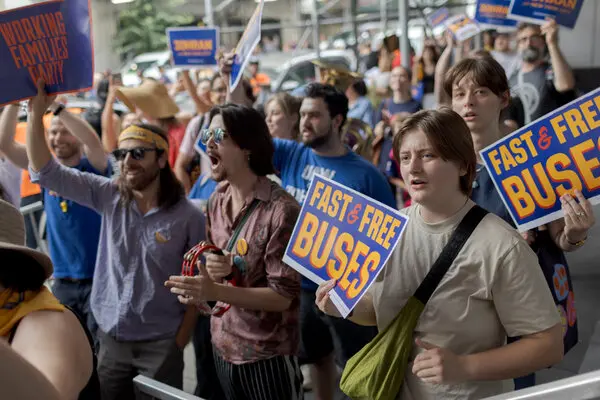
It's difficult to use American case studies in this case. Why? America is a car nation - most Americans use private transport, and design cities and urban areas around that. Only America's biggest cities - Chicago, New York, L.A., and the like, are transit cities - cities where public transit has major market share. Among all of these, New York is the only city in the United States where more than 50% of all citizens don't own cars at all. That means if fare free buses could work anywhere in the US, it's in New York. It also means we have to look outside of the US for public transport precedents.

The shining international example of free public transport is Luxembourg - now entering the fifth year of free public transit - trams, trains and buses, Luxembourg saw millions of citizens enter public transit for the first time - tram use increased from 6 million in 2020, to 31 million by 2024. The key success in Luxembourg's policy was a concurrent improvement in their public transit systems - it made public transport the unequivocally better option. Fast, extensive and free trams, trains and rural-access buses, Luxembourg made it work. Luxembourg is also much less dense than New York - with just 263 people per kilometer to New York's 2700.
If we look at the flip side - high population-density cities that are majority public-transit, we mainly find cities like Hong Kong, Singapore and Seoul - Hong Kong alone has 81% of all residents using public transit. A poll by Timeout also ranked Hong Kong's public transit the best...in the world. Hong Kong's bus model is pretty much the exact opposite of fare-free - Hong Kong's MTR corporation generated $15 billion dollars of profit in 2024. It has a farebox recovery ratio of about 124% - which means that for every dollar invested into public transport system, it generates a return of 24% more. Now compare that to New York's pre-covid ratio of...53%, which fell after COVID.

How is this possible? Well, Hong Kong, with population density higher than even New York's, pursued an aggressive strategy to grow public transit - making public transport brilliant, and actively de-incentivizing car ownership. Hong Kong's system is cheap, affordable and efficient - with 99% of rides arriving on time. On the flip side, a new luxury car would be taxed 115% of its original price. That means that most people like public transit, and most people can't get cars.

Of course, neither Hong Kong nor Luxembourg are perfect comparisons. New York City has a unique culture and different public transport challenges. Yet, in both of these case studies, one thing remains clear - fare-free is not the crux of a strong public transport system - fast is. For Mamdani to deliver on his campaign promises, improving public transport is the priority - and maybe priority bus lanes won't hurt.🙂↔️
Regardless of where you are, transport is a huge part of budgeting, especially when money is tight. Learn how to construct the best budget for you here: https://readmomentum.co/episode-3-how-do-i-construct-a-budget/