Episode 1: How does the economy "work"?
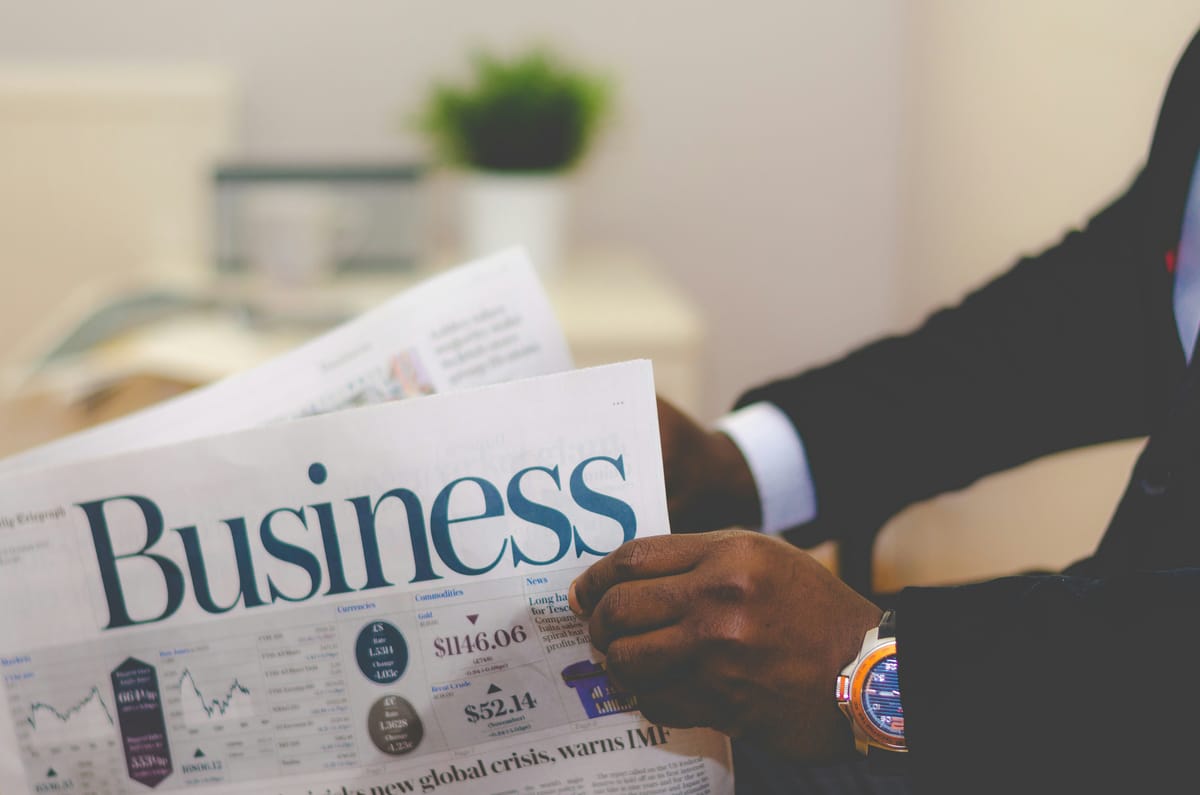
"It's the economy, stupid."
That common epithet, among others, seems to be a catch-all term that's supposed to be the miraculous explanation to everything. Yet, to everyone who hasn't taken AP, IB or A-Level Econs (and maybe even to those who have), it's sometimes difficult to actually understand the complex terms being thrown around and how they actually impact our own daily lives. So what is the economy, and how does it actually work? Enjoy a history of understanding, told through memes.
Let's return to caveman times. Before things like civilization and air conditioning existed, before somebody invented the flushing toilet, before even the founding of Oxford University. Back then, pretty much anything you'd use in your lifetime would be made by you - you'd live in a hut or tent you made from cloth you (or your wife, or partner, or tribe member) would construct, and eat from food you hunted or gathered. That life was a lot of work, right?
Well, at some point, one person realized that they could just do one of those things, and do it really well, and get other people to pay for it. Behold- jobs. People began to specialize, doing one thing for the community, and getting everybody else to do other things in return. Now, it was one person's job to build all the huts in a village, one person's job to make all the cloth, one person's job to find all the wood, and so on so forth.
Now that they had all specialized, they needed a way to trade - to get everything else they needed by exchanging the goods they had. Just exchanging things based on random units of value was totally arbitrary, and meant that somebody could get cheated out of their money!
Except money didn't exist....
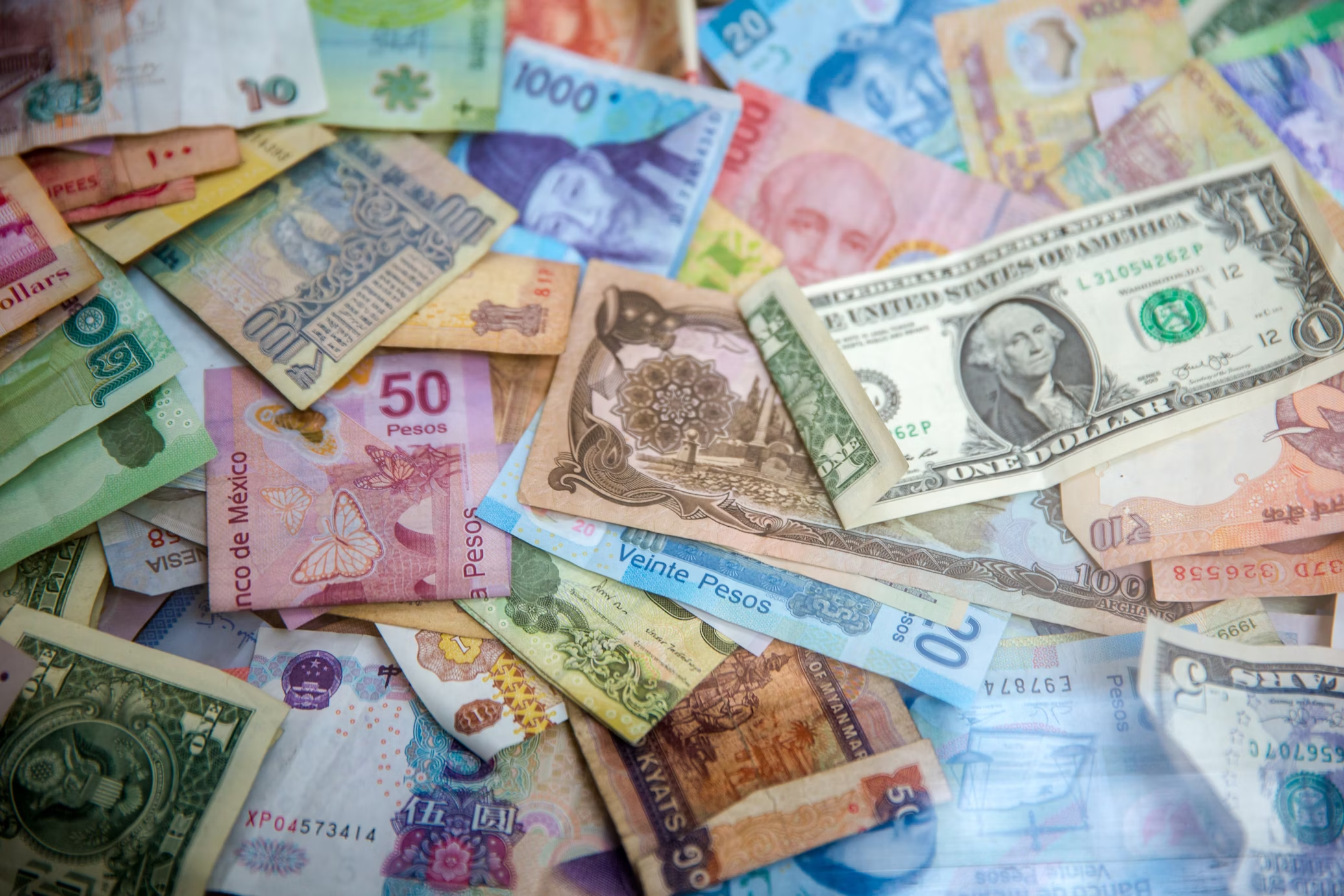
.....So we invented money!
That's what money really is - just a basic piece of paper that's supposed to represent a universally acknowledged unit of value, that could be exchanged for stuff, and then used to exchange with other stuff. Think of it this way - if you were to go into a shop and hand someone a 100-baht note (for our lovely Thai readers) and buy a milkshake, the shopkeeper wouldn't now have something worth 100-baht, they would literally have a piece of paper. However, it would be recognized by their local grocer as being worth a 100 baht, so they can exchange it with them to buy food. TL:DR - money is a store of value, that we can exchange for goods and services.
That's the basis of our economic system - four interconnected groups that create all the stuff we need and use, and the unit of value (money) that we use to represent it. What are those four interconnected groups?
- Public: Ordinary people? The producers and consumers? In the economic system, we both act as workers that create goods and consumers that then create value by buying those goods, putting us at the center of the system. We control what gets bought and sold, because we are working the jobs within companies and we are buying the stuff that is sold to us. We make income by doing jobs, (fancy: employment) and spend that income on products and services
- Businesses: Businesses are organizations that actually create and sell goods in order to make a profit - you can think of them as organized groups of people that then form separate entities that manage goods and create value - businesses are units that often participate with specific goods in specific markets. They make money by selling goods and services - measured as a total amount called revenue, and have costs to make those goods and services. The total amount of money that they have after paying costs is their profit
- Government: These are institutions (also made by people) that use legislation and policy to regulate the flow of capital, by controlling the money policies of that specific nation. Governments earn money through taxes, which are essentially various fees you have to pay as a citizen of a country to enjoy stuff that everybody has - like roads and public transportation, infrastructure, and more. They then use policy to determine how the economy might run
- Environment: Where all the raw materials that we use to make products come from, and where it all goes back to
As these four factors interact, we get an economy - a system where goods and services flow in order to generate economic value, which we measure in money.
As you'd know if you've ever been to a foreign country, money isn't exactly the same everywhere. Most countries will have their own units of money, called currencies, that fluctuate with value depending on the way that country's system is working. When certain factors change within it, the value of the currency is also going to change.
Beyond the different currencies within countries, the actual price, or the overall value of a good or a service is really determined by two factors that are reciprocal to each other - supply and demand. Supply is the overall amount of a specific good or product that is available in a place for people to buy, and demand is the amount of people who actually want to have it. These two factors form an equilibrium that then determines the price of an item.
- If the supply is the same as demand, the price will remain the same
- If supply is greater than demand, the price will go down, as producers compete to get consumers to actually buy a thing
- If supply is less than demand, then the price of an item will go up, as consumers will be willing to pay more in order to compete
These two factors, when working in tandem, affect the way an entire economy might operate - since each market, or specialized field of goods will involve its own trend of buying and selling, and if we look at all the markets in a specific nation or even the world overall, we then have a broad picture of what an entire economy might look like.
If we were to return to way back when (not way, way back when, but like a more recent way back when yk.) you'd find people measuring the economies of specific countries or towns or even villages. This is because they were usually isolated economies - specialization would happen between individuals and companies, but not with whole nations - the nations would be a self-containing system with little input from others.
A fun thing called globalization completely dashed that. Globalization is the increase of trade between different countries, leading to gradual specialization into specific top industries for each country. Basically, in economic units, the entire world can be considered one, and each country has its own job. Those key sectors are what the country can be considered to be the best at and use the most. The rest of the stuff? Usually comes from trade. This means that the global economy has become very interdependent - that's why Russia invading Ukraine turned Norway into the EU's main oil supplier, and led to gas prices in the United States increasing, and caused changes in indigenous rights in Canada!
Within national economies, there are usually different balances of the amount of control that companies have, or the private sector, or that governments have, or the public sector. In an economy, a booming private sector means that competition (or supply and demand) is the main thing driving the production of goods and the creation of value, which we can collectively call growth. In these economies, people can typically pursue careers that they want, and there is both more diversity in the products that go out and more of an incentive to do work so you can outcompete others. With a strong public sector, you can guarantee greater transparency, and can ensure that people have security through things like a social safety net.
A country's system that mainly runs on the private sector is what is commonly known as a free-market economy. In a free-market economy, companies are driven by the need to maximize profit, and will thus compete with other businesses with the same niche to do so. For example, technology companies like Apple and Microsoft constantly compete to come out with better products. Their competition drives the development of new products, like iPhones and Windows PCs. Without the competition, they might not have developed those products in the first place.
A system that's primarily run by the public sector can be known as a command economy, where it's the government that gets to decide where money goes. One example of a country that primarily runs with a command economy is Brunei, where 30% of the entire country's population was employed in government services, and even more in government-owned enterprises. In Brunei, citizens don't technically pay taxes! Here, the public sector makes most of the decisions about how the nation creates money. Theoretically, command economies are supposed to be fairer. In practice? Google it. We'll let you decide.
In reality, most economies are mixed - which means that they have both a public and a private sector. The specific mix or sizes of each sector is really dependent on the country in question! What does it matter to you? Well, the type of economy you live in is going to determine the influence that a government or a company is going to have on you. Understanding how these economies actually operate gives you the foundation of navigating them into the future. You'll also finally understand what people yap about when they're talking about the economy.
So how do we know that the system is doing what it's supposed to do? And how can we tell when there are some big changes going on? Well there are four big trends we can look at to tell how an economy is doing:
- GDP (Gross Domestic Product): The total value of all goods and services a country produces, which affects you because a growing GDP usually means more jobs, higher incomes, and better economic opportunities, while a shrinking GDP can lead to layoffs and fewer prospects.
- Employment: The measure of how many people in the labor force are working, which matters to you because high employment makes it easier to find and keep a job, while high unemployment makes the job market more competitive and unstable.
- Interest Rates: The cost of borrowing money or the reward for saving it, directly shaping your life since higher rates make loans (like mortgages, student loans, or credit cards) more expensive but increase savings returns, while lower rates make borrowing cheaper but weaken savings growth.
- Inflation: The rise in overall prices of goods and services over time, which impacts you because it reduces the purchasing power of your money—your paycheck buys less unless your income rises alongside inflation.
What we see typically, however, is that economies operate with a consistent cycle of growth (where the total amount of output increases) and recession (where output declines). There are four phases to this cycle:
- As the economy expands, the amount of economic activity increases, with low interest rates, more businesses expanding and higher employment. However, this can often lead to more inflation. During this period, you might see your income grow, but the stuff you might buy becomes expensive
- After a certain point, the economy peaks, and hits a ceiling of growth, due to limits in resources and other factors
- The amount of economic activity slowly begins to decline, causing the amount of output to decrease and the economy to contract. These are the periods we tend to disfavor and avoid - if these periods get really bad, that's when catastrophic economic events like depressions happen.
Just like economic expansion, this downsizing also hits a minimum point, or a trough, before continuing right back up again
All this goes to show that the economy is really just a complex, yet simple to parse ecosystem that shifts as we shift. It's made up all of the things we create and do, and you're at the center of it.